
Reviewed · CULTURAL VILLAGE TOURS
Mari-Mari Cultural Village Tour Including Lunch
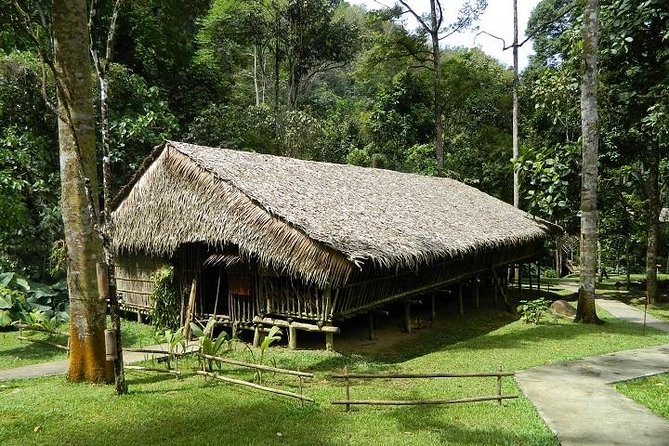
Mari-Mari Cultural Village turns a morning near Kota Kinabalu into a tour of five Sabah communities: Dusun, Rungus, Murut, Bajau, and Lundayeh. You cross a suspension bridge, meet a village chief, enter traditional homes, sample local food and drinks, and watch dances that give the displays some life.
I like the hands-on demonstrations and the easy hotel pickup. The food tasting gives you more than a row of buildings to photograph, and guides such as Zul, Mac, and Aril have been singled out for their humor and clear explanations. The main caution is transport: some pickups have been late, cramped, smoky, or poorly communicated.
The tour is described as shared, with a maximum of 15 people, not a guaranteed private outing. At $58 per person, the price makes sense if you value round-trip transport, lunch, and a guide, but less so if you only want admission to the village.
Key points at a glance
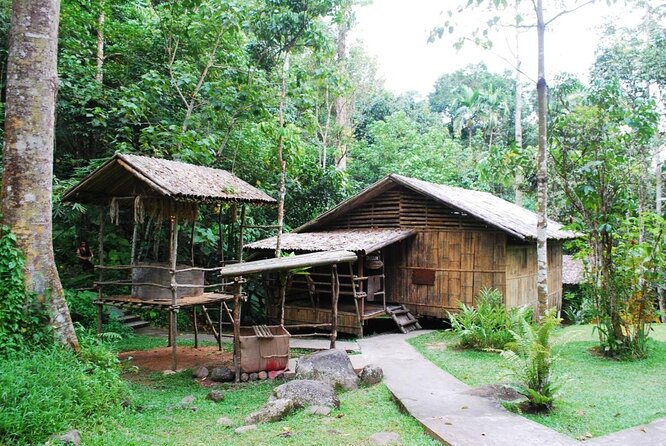
- Five communities in one visit: See traditional homes and customs linked to the Dusun, Rungus, Murut, Bajau, and Lundayeh peoples.
- Food is part of the lesson: Try local snacks and drinks during the house visits, followed by lunch and high tea.
- A performance closes the visit: Music and traditional dance provide a lively finish to the cultural program.
- Morning pickup at 9 am: The experience lasts about five hours, with roughly three hours at the village.
- Shared does not mean private: Groups can reach 15 people, and the village program may bring several groups together.
- Rain need not spoil the day: Bring protection for wet weather, since much of the experience takes place around traditional outdoor buildings.
Crossing the bridge into older Sabah
The day begins with pickup at about 9 am from a centrally located Kota Kinabalu hotel. Round-trip transportation is included, along with an English-speaking driver. The drive itself is not the star of the tour, but it removes the need to arrange separate transport to the village.
Arriving at Mari-Mari, you receive a briefing on village rules before entering. That small pause matters. This is a staged cultural village, not an untouched settlement, and the visit works best when you treat the houses, demonstrations, and ceremonies as a respectful presentation rather than a theme-park photo stop.
A welcome ceremony with the village chief follows. You then cross a suspension bridge into the site. The bridge gives the entrance a bit of theater, and the change from hotel pickup to traditional compounds makes the morning feel like a proper outing rather than a quick museum visit.
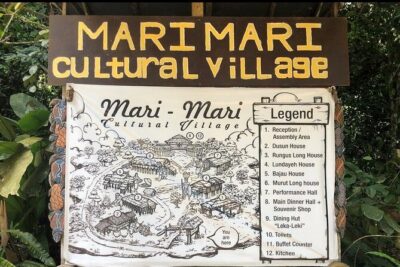
The village presents five communities associated with Sabah. Each has its own house style, customs, food, drinks, stories, and dance traditions. You will not become an expert in five cultures in one morning, but you will get useful points of comparison: how people built homes, stored food, worked, entertained themselves, and adapted to local conditions.
More Cultural Village Tours in Kota Kinabalu
- Kota Kinabalu: Mari Mari Cultural Village Tour with Lunch
★ 5.0 · 152 reviews - Kota Kinabalu: Mari Mari Village & Bongawan Cruise Package
★ 5.0 · 32 reviews - Private Tour Kampung Gipsi Sabah Cultural Village Kota Kinabalu
★ 5.0 · 32 reviews
Five houses, five different ways of living
The house visits are the strongest part of the experience. Guides explain how each traditional home was used, then demonstrate selected skills or customs. The exact emphasis can vary with the guide and the flow of the group, but you should expect a series of short stops rather than one long lecture.
The Dusun, Rungus, Murut, Bajau, and Lundayeh displays give the tour its range. You move from one community to another, learning through objects, construction details, demonstrations, and storytelling. The result is easier to remember than a list of dates or names.
The format also suits families. Children can see how a house works, taste unfamiliar foods, and watch a performance instead of sitting through a formal museum talk. Adults who enjoy cultural detail will get more from it if they ask questions and pay attention to the practical parts of daily life.
Some groups can overlap inside the compounds, especially when the village is busy. That means you may occasionally wait for space or hear another guide nearby. If you want quiet, private conversations at every stop, this is not the right format. If you want a broad introduction in a manageable half-day, the shared setup is reasonable.
Several guides have made a strong impression. Zul is described as funny, engaging, and good with families. Mac has also been praised for making the visit easy to follow. Aril is another guide associated with attentive care and clear explanations. Your actual village guide may be different, so regard these names as useful examples rather than a guarantee.
Tasting Sabah one house at a time
Food is not an afterthought here. During the house visits, you can try different foods and drinks connected with the communities being presented. The tastings help explain culture in a direct way: ingredients, preparation, hospitality, and everyday habits all become easier to understand when you can sample them.
The portions may move quickly when the group is large, so do not assume every item will remain available throughout the stop. The experience includes local lunch and high tea, and the meal is generally treated as part of the value of the tour.
The supplied details contain a slight variation about the meal setting. The main program says lunch is served inside Mari-Mari, while one account describes a local meal outside the village instead. It is safest to expect lunch as part of the package, but not to build your plans around a particular dining room or exact menu.
One practical point: other food and drinks are not included. Bring a little extra money if you want anything beyond the provided meal and tastings. The tour is not designed as a food crawl, but the chance to try several small items adds welcome variety to the house tour.
Music, dance, and the headhunter stories
The cultural performance gives the morning its energy. Traditional music and dance bring the earlier explanations together, and the lively guides and welcoming staff help keep the show from feeling like a dry presentation.
The program also touches on headhunting, a subject that often catches attention. It is presented as part of Borneo’s earlier cultural history, alongside information about housing, customs, and community life. You should expect an educational performance rather than a graphic account.
The dance is especially useful for younger visitors because it breaks up the house stops. For adults, it provides a chance to see movement, music, and ceremony rather than only hearing descriptions of them.
The show can be popular, so timing and crowd levels may affect how relaxed the viewing feels. A shared tour means you are experiencing the performance with others, and the overall rhythm is set by the village schedule rather than by your own pace.
Same base, a completely different kind of day:
- 2D1N Mount Kinabalu Climbing
★ 5.0 · 494 reviews - Bongawan River Cruise: Proboscis Monkey & Fireflies Mangrove
★ 4.8 · 437 reviews - Guided Snorkeling Day Trip, Kota Kinabalu, Sabah, Malaysia
★ 5.0 · 282 reviews - Bongawan Wetland: Proboscis Monkey and Fireflies Shared Tour
★ 4.2 · 137 reviews
What the five-hour schedule really means
The total outing lasts about five hours, with the village portion listed at roughly three hours. Pickup begins around 9 am, and the return follows lunch and the farewell to the villagers.
That leaves enough time for the main program without turning the day into an exhausting full-day commitment. You can still have part of the afternoon in Kota Kinabalu. The schedule is also useful for families, since it combines transport, touring, food, and a performance in one compact package.
The phrase travel at your own pace should be read carefully. You are not on a private, free-roaming visit. The tour follows the village’s welcome, house demonstrations, meal, performance, and departure schedule. You may have some flexibility within stops, but the group must move together.
A maximum of 15 people is stated. Actual groups may be smaller, but you should prepare for a shared outing. One booking was described as a private group of eight, yet even that arrangement had a vehicle-capacity problem, with one person placed in another car. If you are booking for a larger party, confirm vehicle seating in advance.
The real value of the $58 price
At $58 per person, the cost covers more than entry. You are paying for round-trip hotel transport from central Kota Kinabalu, an English-speaking driver, village admission, the guided house program, demonstrations, cultural activities, food tastings, lunch, high tea, and the performance.
That bundle is useful if you want an easy morning with the main pieces arranged for you. The cultural village itself is the main value. Transport adds convenience, especially if you do not want to work out your own route or coordinate admission.
The value becomes less clear if your transport is late, uncomfortable, or badly managed. Several accounts describe prompt pickups and good communication through WhatsApp, while others describe late arrivals, a smoky vehicle, a tight back seat, or an unnecessary stop at a gas station. Those problems do not change the quality of the village program, but they affect how much of the $58 feels well spent.
A separate complaint involved a solo participant who paid for two places and then found the arrangement confusing. Another person felt the transport cost added little. If you are traveling alone or comparing this with arranging your own ride, check the booking terms and pickup details before paying.
Rain, shoes, and other useful preparation
Sabah can be wet, and rain does not necessarily ruin this outing. Much of the setting is connected with traditional homes and outdoor paths, so wet weather can even make the jungle setting feel more convincing. Still, bring rain protection. Cheap ponchos may be available at the village, but it is better not to depend on that.
Wear shoes suitable for a bridge, paths, and stops around traditional buildings. The supplied information does not specify a dress code, so focus on comfort and practical protection from rain.
Keep your morning open for the full schedule. The tour includes lunch and a farewell before the transfer back to your hotel, and leaving early may not be possible. One participant who felt unwell was asked to remain for lunch before returning, so do not assume the driver can shorten the visit on demand.
Most people can participate, and the activity has a maximum group size of 15. Specific accessibility details are not provided, so you should ask the operator about mobility needs before booking if that matters for your party.
Where transport helps, and where it falls short
The included transfer is the simplest part of the booking in theory. Pickup and drop-off are offered at centrally located Kota Kinabalu hotels, and some drivers have been prompt, friendly, and helpful. One driver, Napoleon, received particular praise for keeping the journey running smoothly.
But the transport quality appears less consistent than the village experience. Complaints include late pickup, no advance message, an impatient driver, smoke in the vehicle, cramped seating, and a delayed return. A late pickup is more than a small nuisance if you have an afternoon flight, cruise departure, or another fixed appointment.
If you are using this tour before a cruise departure, leave plenty of spare time. A confirmed reservation does not remove the need to check the pickup plan directly. The safest approach is to make sure the operator knows your hard return time and to avoid booking the tour when a small delay would cause a major problem.
Who will get the most from this visit
I would choose this outing if you want a clear introduction to Sabah’s native cultures without arranging separate admission, food, transport, and guiding. Families, first-time visitors to Kota Kinabalu, and anyone with only one open morning are a good match.
It also suits people who prefer demonstrations and performances to a conventional museum. The tastings, house visits, and dance show give the subject variety, and the village guides generally add warmth and humor.
You may want another plan if you dislike group schedules or need exact transport timing. Independent visitors who only want to see the site may find the $58 package costly compared with arranging their own ride and admission. The tour is also not ideal for someone seeking a private cultural conversation, since the group can include up to 15 people and several groups may overlap.
Book at least 24 hours before the start time if you need the option of a full refund. Cancellations made within 24 hours are not refundable, and changes inside that period are not accepted.
Should you book the Mari-Mari tour?
Yes, if your priority is the village program itself. The house demonstrations, food and drink tastings, traditional lunch, and dance performance make this a useful introduction to several Sabah communities in one morning. Guides such as Zul, Mac, and Aril have helped make the experience lively and easy to understand.
Be more careful if transport reliability matters as much as the cultural visit. Confirm pickup, vehicle space, and the meaning of shared transport before booking. At $58, this is a fair convenience package when the transfer works well, but not the best choice if you can arrange dependable transport yourself and only want the village ticket.
FAQ
How long does the Mari-Mari Cultural Village tour last?
The full experience lasts about five hours. The village portion is listed as roughly three hours, followed by lunch and the return transfer to your hotel.
What time is hotel pickup?
Pickup is scheduled for about 9 am. Hotel pickup and drop-off are offered for centrally located hotels in Kota Kinabalu.
Is this a private tour?
No. It is described as a shared tour with a maximum of 15 participants. A private group booking may be possible in some cases, but private touring is not guaranteed by the standard arrangement.
Which communities are presented at Mari-Mari Cultural Village?
The program presents the Dusun, Rungus, Murut, Bajau, and Lundayeh communities.
Is lunch included?
Yes. Local lunch and high tea are included, along with food and drink tastings during the cultural program. Other food and drinks are not included.
Is transportation included?
Yes. Round-trip transportation and an English-speaking driver are included, with pickup and drop-off at centrally located Kota Kinabalu hotels.
Can most people participate?
The supplied information says most people can participate. The tour has a maximum of 15 participants, but specific accessibility details are not provided.
What is the cancellation policy?
You can cancel up to 24 hours before the experience for a full refund. Cancellations or changes made less than 24 hours before the start time are not accepted and are not refunded.
Just added around Kota Kinabalu
- Sabah: White Water Rafting Grade 3-4 at Padas River★ 4.7 · 3 reviews
- Sunset E-Foil Experience in Tanjung Aru Beach★ 5.0 · 10 reviews
- Island Hopping ( Manukan & Sapi Island ) From Kota Kinabalu★ 4.5 · 9 reviews
- Monsopiad Cultural Village Visit with Private Transfer from Kota Kinabalu★ 4.5 · 5 reviews
- Join us for a RAID Try Dive in Kota Kinabalu★ 5.0 · 27 reviews
- Mangrove Kayaking Experience in Borneo★ 5.0 · 8 reviews
- Mari Mari Cultural Village★ 4.5 · 11 reviews
- Mount Kinabalu Climbing 3 Days 2 Nights★ 5.0 · 7 reviews
Cultural Village Tours, compared.

Private Tour Kampung Gipsi Sabah Cultural Village Kota Kinabalu
Read our review →
Sabah: Mari-Mari Cultural Village Visit + Lunch + transfer
Read our review →
Kinabalu Park With Rumah Terbalik & Desa Cow Farm
Read our review →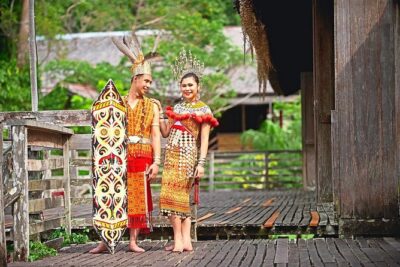
Browse the lists this tour appears in