
Reviewed · CULTURAL VILLAGE TOURS
Half-Day Mari Mari Cultural Village from Kota Kinabalu
Mari Mari Cultural Village brings Sabah’s major ethnic groups together in one well-organized visit. You move through longhouses, watch fire starting and blowpipe demonstrations, smell food cooking in bamboo, and finish with a cultural dance performance and meal. The food demonstrations and the chance to see how homes were built make this more than a staged dance show.
I like the easy hotel pickup from Kota Kinabalu and the small maximum group of 15. I also like the range of cultures covered: Dusun, Rungus, Lundayeh, Bajau, and Murut. The main drawback is that four hours gives you only a short introduction to each group, so this is a sampler rather than a full study of Sabah’s peoples.
Key points to know before booking
- Five Sabah cultures in one visit: You see displays connected with the Dusun, Rungus, Lundayeh, Bajau, and Murut communities.
- Traditional skills are demonstrated: Watch blowpipe making, fire starting, tattooing, and bamboo cooking.
- Transport is simple: Hotel pickup and drop-off from Kota Kinabalu are included, with an air-conditioned minivan or Innova depending on group size.
- Food changes with the session: The 9 am session includes a buffet lunch, while the 1 pm session includes hi tea.
- A live dance show closes the visit: The performance gives the tour a lively finish after the village walk.
- Port timing needs care: Cruise passengers should note the morning session begins at 10 am and the afternoon session at 2 pm.
A practical introduction to Sabah’s cultures
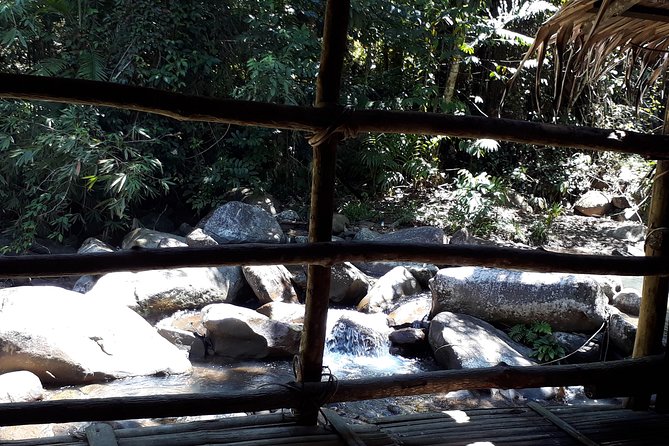
Mari Mari Cultural Village sits in the countryside outside Kota Kinabalu, away from the city’s hotels and traffic. It functions as an open-air museum, with buildings and demonstrations designed to explain how several ethnic communities lived, worked, cooked, and built their homes.
The setup is useful if you have limited time in Sabah. Rather than spending separate days finding different communities, you get a broad introduction in one half-day. That convenience comes with a tradeoff: each stop lasts about 20 minutes, so you will see representative customs rather than spend long periods with one community.
Your guide or driver-guide helps connect the displays to daily life. Sam is one guide associated with this experience, and Joe has also helped visitors with tight port schedules. The exact staff member can vary, but the small group limit gives you a better chance to ask questions than a large coach tour would.
More Cultural Village Tours in Kota Kinabalu
- Kota Kinabalu: Mari Mari Cultural Village Tour with Lunch
★ 5.0 · 152 reviews - Mari-Mari Cultural Village Tour Including Lunch
★ 4.5 · 45 reviews - Kota Kinabalu: Mari Mari Village & Bongawan Cruise Package
★ 5.0 · 32 reviews
Getting there from Kota Kinabalu
Hotel pickup and drop-off are included, which is one of the strongest practical reasons to book this tour. Transport is by air-conditioned minivan for groups of six or more, or by Innova for groups of five or fewer.
The village is in the countryside, and the ride removes the need to arrange your own taxi or rental car. It also keeps the half-day schedule tidy. You are not spending part of your morning figuring out directions or negotiating a return ride.
The tour accepts a maximum of 15 people. That is large enough to create a social atmosphere but small enough to keep the village stops from feeling like a mass procession. If you are arriving by cruise ship, pay close attention to the special start times: the morning session begins at 10 am and the afternoon session at 2 pm.
Entering Mari Mari Cultural Village
The first stop introduces Mari Mari as a museum that preserves and presents Borneo’s ethnic cultures. The village’s purpose is educational, but the presentation is active rather than confined to display cases.
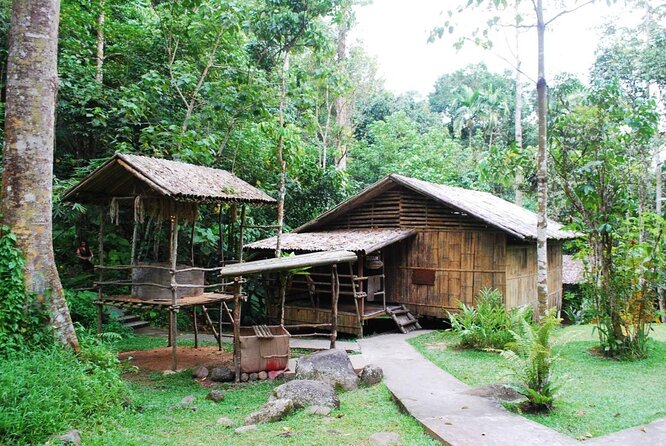
You move from house to house and see how different communities used local materials and adapted to their surroundings. The buildings help make the information easier to grasp. A description of a longhouse is one thing; seeing its raised structure, wood, bamboo, and palm-leaf roofing gives you a clearer picture.
The tour is carefully timed, with around 20 minutes assigned to each cultural stop. That keeps the visit moving, but you should expect quick explanations and demonstrations rather than a leisurely conversation at every house.
The Dusun paddy-growing tradition
The Dusun section explains a culture traditionally tied to paddy cultivation. Dusun communities in the hills and inland areas grew dry paddy, while those on coastal plains and in valleys cultivated wet paddy.
This distinction gives you a useful glimpse of how geography shaped farming. The point is not simply that rice was important. The type of rice cultivation depended on where people lived and what the ground and water allowed.
I find this one of the more useful parts of the visit because it places food, work, and settlement in the same frame. You can better understand why agriculture sits at the center of many Sabahan traditions.
Same base, a completely different kind of day:
- 2D1N Mount Kinabalu Climbing
★ 5.0 · 494 reviews - Bongawan River Cruise: Proboscis Monkey & Fireflies Mangrove
★ 4.8 · 437 reviews - Guided Snorkeling Day Trip, Kota Kinabalu, Sabah, Malaysia
★ 5.0 · 282 reviews - Bongawan Wetland: Proboscis Monkey and Fireflies Shared Tour
★ 4.2 · 137 reviews
The raised Rungus longhouse
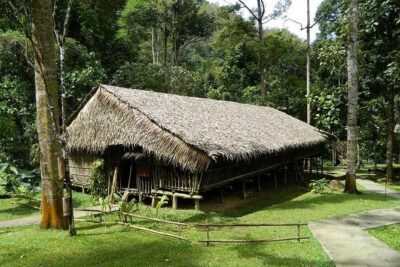
The Rungus stop focuses on the longhouse, traditionally divided into seven to 15 family apartments. The building is made from wood, bamboo, and atap, a roofing material made from palm leaves.
The house is raised above the ground. That design helped protect residents from flooding and wildlife, including snakes. It also shows how practical traditional building methods could be, using materials available nearby rather than relying on modern construction supplies.
The longhouse is one of the tour’s clearest visual highlights. You can see how a shared structure supported several families while still giving each household its own apartment. The short visit may leave you wanting more detail about family life and community rules, but the building itself makes a strong impression.
Lundayeh life, food, and preservation
The Lundayeh section covers a community traditionally involved in agriculture, poultry and livestock raising, hunting, and fishing. Pigs and buffaloes were part of rural life, while meat and fish could be preserved with salt through brining or pickling.
This stop gives the food demonstrations extra meaning. Preservation was not just a cooking preference. It was a practical way to store protein in a setting where people depended on farming, fishing, and hunting.
You may notice that the tour often links household activity with survival skills. That is helpful context when you watch food preparation later. The village is not presenting dishes as isolated samples. It is showing how cooking fit into a larger cycle of work and storage.
The Bajau connection to the sea
The Bajau are often described in broad terms as sea people, but the tour points out that there are distinct East Coast and West Coast Bajau groups. West Coast Bajau communities became more settled and adapted to agriculture, while the older seafaring identity remains part of the wider picture.
This is a useful reminder that ethnic labels do not describe one single lifestyle. Communities change as they settle, farm, trade, and respond to local conditions.
The Bajau stop is brief, but it adds balance to the visit. The tour is not only about inland farming and forest skills. It also acknowledges Sabah’s connection to coastal life and seafaring.
Murut skills and the blowpipe
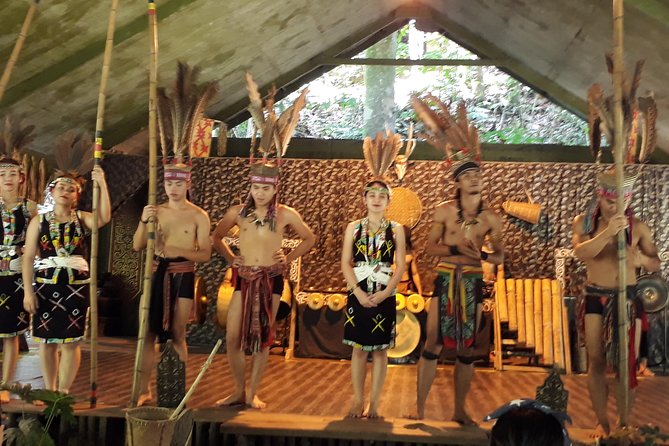
The Murut section covers a group traditionally associated with shifting cultivation, hill paddy, tapioca, fishing, and blowpipe hunting. It also explains that the Murut were the last of Sabah’s ethnic groups to give up headhunting.
The headhunting reference is historical context, not the purpose of the visit. The more hands-on part is the blowpipe demonstration, which shows how hunting equipment was made and used.
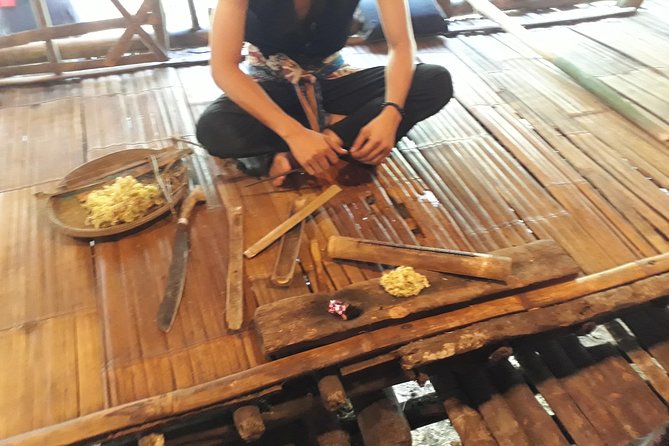
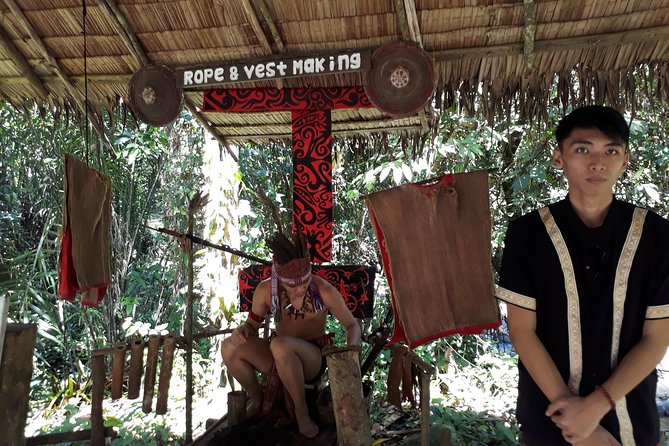
You should also watch for the fire-starting and tattooing demonstrations. These skills are presented alongside explanations of their symbolism, so the tour gives you more than a quick visual trick. Still, the limited time means the guide cannot explain every custom in great depth.
Bamboo cooking, samples, and the meal
One of the most appealing parts of the experience is the food. Before the meal, you can smell bamboo cooking as you move through the village. That scent does a lot of work: it turns an abstract lesson about traditional life into something immediate and memorable.
Food and drink samples are included along the route, according to the tour details. The meal depends on your booking time. The 9 am session includes a buffet lunch, while the 1 pm session includes hi tea.
The buffet gives the morning tour a satisfying finish. The afternoon option is lighter, so check the session details before booking if a full meal matters to you. Personal expenses are not included, so plan to pay separately for anything beyond the stated food and drink service.
The final Borneo dance performance
A live Borneo cultural dance performance is included. It provides a lively ending after the more explanatory village stops and gives you a chance to see movement, music, and costume presented together.
I like that the performance comes after the house visits and demonstrations. You first get some context about the communities, then see a staged cultural presentation with a better idea of what you are watching.
This is still a performance for visitors, not a private village ceremony. That does not make it worthless, but you should approach it as an introduction designed for public education. The strength is its energy and accessibility. The limitation is that a short show cannot represent every regional variation.
What the $90 price really covers
At $90 per person, the price is easier to justify if you value convenience. It includes the village admission, driver-guide, hotel pickup and drop-off, transport, the dance show, and food tied to the selected session.
The included transport matters because the village is outside central Kota Kinabalu. If you had to arrange separate rides and entrance tickets, the apparent savings from going independently might shrink. The small group cap also adds value compared with a very large coach outing.
The price is less attractive if you want a quiet, slow, deeply specialized cultural study. This is a structured sampler covering five groups in about four hours. You are paying for access, transport, organization, and a broad introduction, not an extended field experience with one community.
The tour is often booked around 18 days ahead, which is a useful planning clue. You do not need to book a year in advance, but waiting until the last minute may limit your choice of session or date.
Who should book this half-day visit
I would recommend Mari Mari Cultural Village if you have only a short stay in Kota Kinabalu and want cultural context without giving up a full day. It also suits families and first-time visitors who prefer clear explanations, demonstrations, and a set route.
Cruise passengers can use it too, but the timing must be checked carefully. One visitor with a short port stay could not complete the full experience, although the staff adjusted the visit after the driver explained the situation. That flexibility may help, but you should not assume every part can be shortened or rearranged.
The tour also works well for people who like food as part of cultural learning. Bamboo cooking, samples, buffet lunch, or afternoon hi tea add sensory detail to the house visits.
I would be more cautious if your main interest is serious anthropology, long hikes, or extended contact with one particular community. The 20-minute stops are efficient, but they are necessarily selective.
Booking details worth keeping in mind
Confirmation is provided at the time of booking. Most people can participate, and the group maximum is 15.
Free cancellation is available if you cancel at least 24 hours before the start time. Cancellations made less than 24 hours before the experience are not refunded, and changes inside that same window are not accepted. The cut-off follows local time.
Before you book, check three things: your hotel is within the pickup area, you have selected the correct morning or afternoon session, and the meal arrangement suits your plans. If you are coming from a cruise, match the tour time to your ship schedule rather than relying on a normal city-hotel timetable.
Should you book Mari Mari Cultural Village?
Book it if you want an organized, approachable introduction to Sabah’s Dusun, Rungus, Lundayeh, Bajau, and Murut cultures. The best parts are the raised Rungus longhouse, the blowpipe and fire-starting demonstrations, the bamboo cooking, and the combination of food with a live dance performance.
Skip it if you want hours with one community or a less structured experience. For most people staying in Kota Kinabalu, though, the included transfers and broad cultural coverage make the $90 reasonable. Check the session time carefully, leave room for the four-hour schedule, and treat the visit as a well-made first look at Sabah rather than the final word on its many cultures.
FAQ
Where is Mari Mari Cultural Village located?
It is in the countryside outside Kota Kinabalu, away from the city.
How long does the tour last?
The experience lasts approximately four hours.
Is hotel pickup included?
Yes. Hotel pickup and drop-off from Kota Kinabalu are included.
What transport is used?
Groups of six or more use an air-conditioned minivan. Groups of five or fewer use an Innova.
How many people can join the tour?
The tour has a maximum group size of 15 travelers.
Which cultures are covered?
The tour introduces the Dusun, Rungus, Lundayeh, Bajau, and Murut cultures.
What demonstrations are included?
You can see blowpipe making, fire starting, tattooing, and bamboo cooking demonstrations.
Is food included?
Yes. The 9 am session includes a buffet lunch, while the 1 pm session includes hi tea.
Is a dance performance included?
Yes. A live Borneo cultural dance performance is included.
What time does the tour start for cruise passengers?
The morning session starts at 10 am and the afternoon session starts at 2 pm for cruise passengers.
Can I cancel for a full refund?
Yes, if you cancel at least 24 hours before the experience start time. Cancellations made less than 24 hours before the start time are not refunded.
More Half-Day in Kota Kinabalu
- Kota Kinabalu City Half Day Tour
★ 3.5 · 7 reviews - Mari-Mari Cultural Village Half Day Tour
★ 5.0 · 4 reviews - Kota Kinabalu Half Day City Tour with Professional Tour Guide
★ 4.0 · 3 reviews - Kuala Lumpur: Batu Caves Half-Day Tour with Pick-Up Option
★ 4.5 · 4,288 reviews
Just added around Kota Kinabalu
- Sabah: White Water Rafting Grade 3-4 at Padas River★ 4.7 · 3 reviews
- Sunset E-Foil Experience in Tanjung Aru Beach★ 5.0 · 10 reviews
- Island Hopping ( Manukan & Sapi Island ) From Kota Kinabalu★ 4.5 · 9 reviews
- Monsopiad Cultural Village Visit with Private Transfer from Kota Kinabalu★ 4.5 · 5 reviews
- Join us for a RAID Try Dive in Kota Kinabalu★ 5.0 · 27 reviews
- Mangrove Kayaking Experience in Borneo★ 5.0 · 8 reviews
- Mari Mari Cultural Village★ 4.5 · 11 reviews
- Mount Kinabalu Climbing 3 Days 2 Nights★ 5.0 · 7 reviews
Cultural Village Tours, compared.

Private Tour Kampung Gipsi Sabah Cultural Village Kota Kinabalu
Read our review →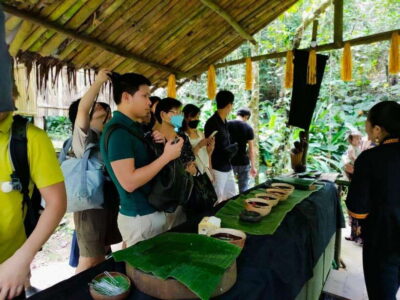
Sabah: Mari-Mari Cultural Village Visit + Lunch + transfer
Read our review →
Kinabalu Park With Rumah Terbalik & Desa Cow Farm
Read our review →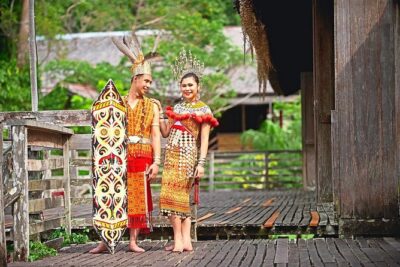
Browse the lists this tour appears in