

Reviewed · CULTURAL VILLAGE TOURS
Sarawak Cultural Village Tour from Kuching
Sarawak Cultural Village brings seven ethnic traditions together in one walkable setting, so you can see traditional houses, daily skills, music, and dance without spending days traveling across Sarawak. The guided visit includes demonstrations such as bamboo carving, straw weaving, and beadwork, plus the chance to try a Penan blowpipe or an Orang Ulu sape.
I like the small-group format, limited to nine people, and the fact that hotel pickup, an English-speaking guide, and admission are included. Guides such as Richard, Vincent, and Mastry have been praised for explaining the cultures clearly and looking after the group. The main consideration is that the final performance can feel a little staged, and the four-hour schedule gives you a focused introduction rather than a slow, detailed study.
Key points to know
- Seven traditional houses in one visit: See a compact cross-section of Sarawak’s ethnic cultures without arranging separate journeys.
- Hands-on cultural skills: Watch wood and bamboo carving, straw weaving, and beadwork, with opportunities to try a Penan blowpipe or Orang Ulu sape.
- Small groups of up to nine: A useful size for asking questions and staying close to your guide.
- Air-conditioned cultural performance: The multi-ethnic show adds music and dance after the house visit, though its polished presentation may feel theatrical.
- Hotel pickup and drop-off: Selected Kuching city hotels are covered, making this an easy half-day outing.
- Plan ahead: The experience averages 84 days of advance booking, requires at least two adults, and offers free cancellation up to 24 hours before departure.
Seven houses, one compact introduction to Sarawak
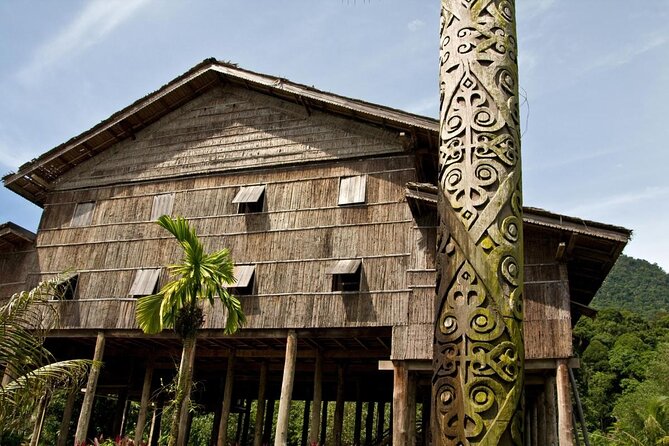
The main reason to choose this tour is efficiency. Sarawak is home to many ethnic communities, and the cultural village gathers seven traditional houses in one place. You get a quick but useful way to compare architecture, tools, handicrafts, and everyday customs.
I find this format especially helpful at the start of a Kuching visit. It gives you a framework for understanding the state before you encounter cultural displays, food, or crafts elsewhere. You will not learn every detail of each community in a few hours, but you will leave with a clearer sense of Sarawak’s variety.
The village is presented as a living museum rather than a row of empty buildings. That distinction matters. You are not simply walking through reconstructed rooms and reading signs. Villagers demonstrate practical skills, and you can speak with people working in the different areas.
Your guide helps connect those details. Richard, Vincent, and Mastry are names associated with this experience, and the guide’s role is important because the houses can otherwise blur together. A good explanation turns a carved post, cooking tool, musical instrument, or woven item into something understandable.
More Cultural Village Tours in Kuching:
- Sarawak Cultural Village Tour from Kuching
★ 5.0 · 13 reviews - Semenggoh Orangutan Center & Sarawak Cultural Village
★ 4.5 · 10 reviews - Traditional Bidayuh Village Bamboo Longhouse Tour
★ 3.5 · 6 reviews
What you see inside the seven ethnic houses
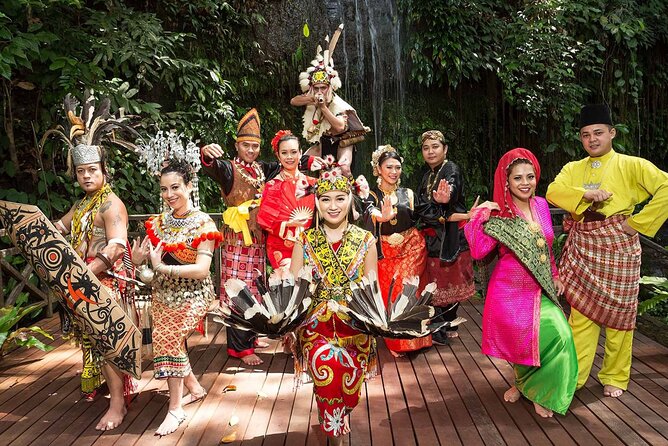
The visit begins after you arrive at Sarawak Cultural Village, with about three hours set aside for the site and its performance. The precise order may vary, but the core experience is a walk through seven ethnic houses.
Each house gives you a different way to look at local life. Pay attention to the construction, the tools on display, and how the rooms are arranged. The value is not just in taking photographs. It is in noticing how a building reflects the needs and customs of the community it represents.
The demonstrations add useful texture. You might see wood and bamboo carving, straw weaving, or beadwork in progress. These are not abstract museum subjects. They are visible, practical skills, and watching them being done makes the finished objects easier to understand.
You may also get a chance to take part. The tour description specifically mentions trying a Penan blowpipe and playing an Orang Ulu sape. These hands-on moments are brief, but they help break up the walking and listening. They also make the visit a better choice for families and for anyone who prefers doing something to reading display panels.
Do not expect a full workshop in each craft. The tour covers a lot of ground in a short period, so demonstrations are likely to be introductions rather than long lessons. If you want a detailed craft class, this is not the right format. If you want a lively overview with practical examples, it works well.
The cultural performance gives the morning a clear finish
The tour includes a multi-ethnic cultural performance in an air-conditioned theatre or amphitheater. This is a useful part of the schedule because it brings the separate house visits together through music and traditional dance.
You can expect a colorful, organized show rather than an informal village gathering. One account described the performance as a little like a theme-park production, though still amusing. That is a fair warning. The show is designed for public presentation, so it may feel polished and simplified.
I would still keep it on the itinerary. For many people, seeing several dances in one performance is the easiest way to recognize differences in movement, costume, and music after walking through the houses. The air-conditioned setting is also welcome in Sarawak’s warm weather.
The performance helps make the four-hour schedule feel complete. You start with the physical setting and crafts, then finish with a shared presentation. If you prefer very quiet, unfiltered cultural encounters, the show may feel too arranged. If you enjoy a clear, accessible introduction, it is a useful ending.
A guide matters more here than it does on a simple museum visit
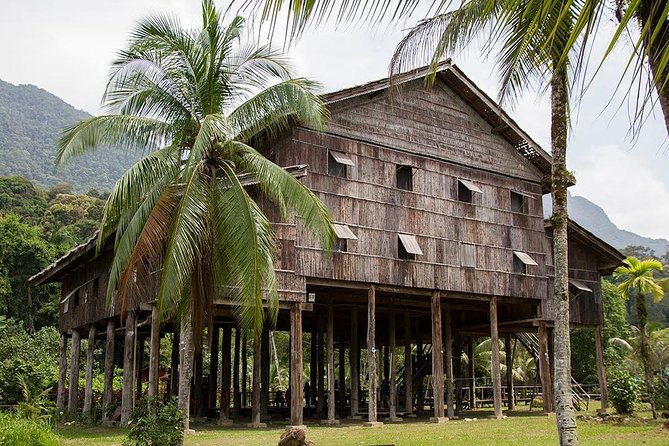
This is not a tour where you only need transport to the entrance. The village’s value depends heavily on the explanations you receive. Seven houses can be fascinating, but without context you may remember only a series of buildings and colorful objects.
An English-speaking guide gives you that context and helps you move through the site in a sensible order. Richard is praised for explaining each group’s culture and helping the local areas feel connected to real people. Vincent is described as friendly and informative, while Mastry is noted for organizing the visit and taking care of the group.
Those details matter because a small group allows more direct contact with your guide. With a maximum of nine people, you should have a better chance to ask why a house is built a certain way, what a tool was used for, or how a particular craft is made.
The guide also helps with pacing. You have about three hours at the village, including the performance, so you need someone who can keep the visit moving without turning it into a rushed checklist. The tour is best when the guide provides short explanations at each stop and leaves enough time for you to look around.
A few more Kuching half-days to weigh up
- Half-Day Heritage Bike Tour in Kuching
★ 5.0 · 162 reviews - Night Froggy Adventure at Kubah National Park
★ 5.0 · 71 reviews - Semenggoh Orangutan Centre from Kuching
★ 4.5 · 53 reviews - Bako National Park from Kuching City
★ 4.5 · 35 reviews
The four-hour schedule works well from Kuching
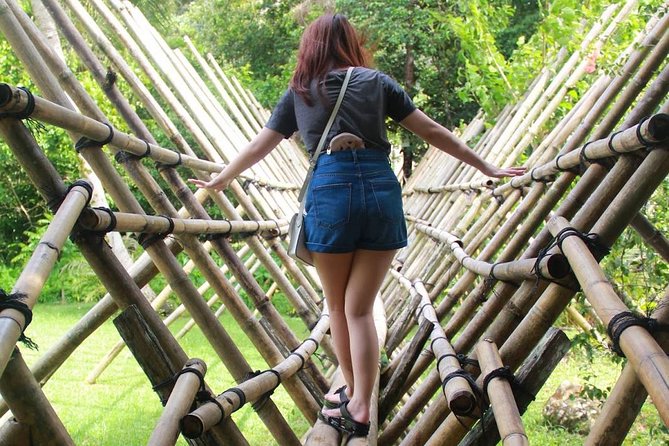
Hotel pickup and drop-off are included from selected city hotels in Kuching. That removes the need to arrange your own transport to the cultural village, which is one of the tour’s practical strengths.
The total duration is about four hours. That makes it easy to fit into a morning or afternoon without giving up a full day in Kuching. It also suits people who want a cultural outing but still plan to explore the city, visit another attraction, or enjoy a slower meal afterward.
The tradeoff is depth. You will see the village, meet the main cultural themes, watch the performance, and return to Kuching within half a day. You will not have unlimited time at each house. If you like to linger over every object or take detailed photographs, the schedule may feel brisk.
The group limit of nine is a strong point. It is large enough to share transport and keep the cost manageable, but small enough to avoid the feel of a crowded coach excursion. A minimum of two adults is required per booking, so this is not set up as a solo departure.
Is the $86 price fair?
At $86 per person, the tour is not the cheapest way to reach the village. The price needs to be judged against what is bundled into it: selected hotel pickup and drop-off, an English-speaking guide, entrance admission, the house visits, and the cultural show.
For a first-time visit to Kuching, I see reasonable value in that package. You are paying for convenience and interpretation, not just entry. The guide gives the buildings and crafts meaning, while included transport saves you the trouble of arranging a separate ride.
The value is strongest if you are staying at a covered city hotel and want a simple half-day plan. It is also stronger for couples, families, and small groups who would rather have a guide than visit independently.
The price is harder to justify if you are already planning to arrange your own transport and prefer to explore at your own speed. The included food and drinks are limited to none, so budget separately for anything you want to eat or drink. Do not mistake the price for an all-day package with meals.
The experience is booked, on average, 84 days in advance. That suggests you should not leave it until the final days of a busy Kuching trip, especially if your dates are fixed.
What the hands-on elements add
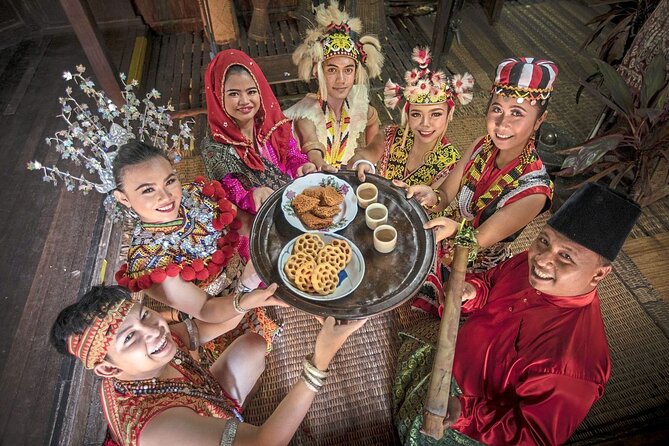
The cultural village does a good job of mixing observation with participation. Watching a craft demonstration gives you an idea of the skill involved, but trying a blowpipe or sape gives you a more direct connection with the objects and traditions on display.
The Penan blowpipe is a memorable detail because it turns a cultural explanation into a physical activity. The Orang Ulu sape offers a different kind of connection through music. You may only have a short turn, but even that helps you remember the house and community linked to the activity.
These moments also make the tour more suitable for children and mixed-age groups. Younger participants may not absorb every explanation about architecture or custom, but they are more likely to stay interested when they can see a craft being made or try an instrument.
Keep your expectations realistic. The provided details do not promise that every visitor will try every activity, and the tour’s main purpose is a guided introduction. Think of the hands-on parts as welcome additions, not full lessons.
The main drawback: a polished version of culture
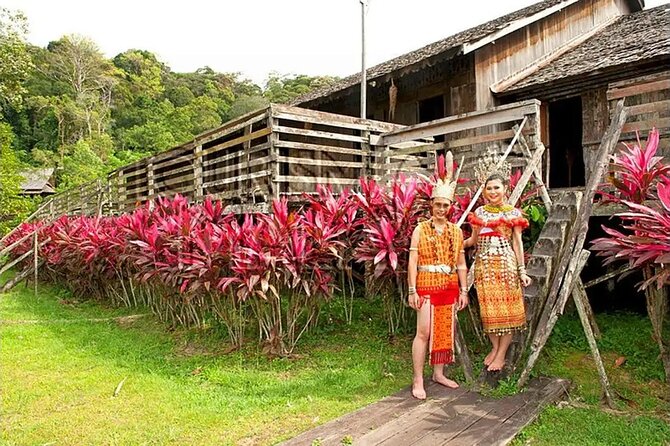
The village is designed to present many communities in a clear, visitor-friendly way. That makes it easy to understand, but it also means the experience is arranged and performed for an audience.
The cultural show is the clearest example. Its costumes, dances, and staging are meant to entertain as well as inform. Some people will enjoy that energy. Others may find it a little Disney-like and wish for a less polished presentation.
The houses also represent a large amount of cultural information in a small area. This can create a risk of compression, where distinct communities begin to feel like a sequence of displays. Your guide can reduce that problem by explaining differences carefully, so the quality of the guide is a major part of what you are paying for.
I would not reject the experience for being staged. Many cultural museums face the same challenge. The important question is whether you want a clear first introduction or a slower, more independent encounter. For the former, the format works. For the latter, it may feel too packaged.
Who will enjoy this Kuching half-day tour?

I would recommend it most strongly to first-time visitors to Sarawak, families, couples, and anyone with only a few days in Kuching. You get a broad introduction without a long day on the road, and the small group makes it easier to ask questions.
It is also a good choice if you want cultural context before visiting other parts of Sarawak. The seven houses give you useful reference points for understanding traditional crafts, instruments, and ethnic customs.
The tour is less suitable if you want to spend an entire day at one community, take a specialized craft class, or avoid staged performances. Independent explorers may also prefer to arrange their own transport and set their own pace.
Most people can participate, according to the supplied tour information, but the format involves walking around the village and moving between houses. If you have a concern about your ability to take part, ask the provider before booking.
Booking, cancellation, and useful planning notes
Hotel pickup and drop-off apply to selected city hotels in Kuching, so confirm that your accommodation is covered before you rely on the transfer. The tour is conducted in English and includes admission, but food and drinks are not included.
Confirmation is sent within 48 hours of booking, subject to availability. Since the experience requires at least two adults and can be canceled if that minimum is not reached, keep the cancellation terms in mind when building your schedule.
You can cancel up to 24 hours before the start time for a full refund. Changes or cancellations made less than 24 hours before the local start time are not accepted for a refund. If the minimum number is not met and the operator cancels, you will be offered another date or experience, or a full refund.
Should you book the Sarawak Cultural Village Tour?
Book it if you want a convenient, guided introduction to Sarawak’s many cultures in a single half-day visit. The strongest reasons are the seven houses, small groups, practical craft demonstrations, included transport, and guides such as Richard, Vincent, or Mastry who can make the setting easier to understand.
Skip it if you want an unstructured visit, a long specialist workshop, or a performance-free museum experience. The cultural show is polished, and the schedule favors breadth over extended time at each stop.
For most first-time visitors staying in Kuching, I think the tour earns its place on the itinerary. It gives you a useful cultural foundation, keeps transport simple, and leaves the rest of your day open.
FAQ
How long does the Sarawak Cultural Village tour last?
The tour lasts approximately four hours. About three hours are allocated to the Sarawak Cultural Village itself, including the cultural performance.
What does the tour include?
The tour includes pickup and drop-off from selected city hotels in Kuching, an English-speaking guide, and the entrance fee.
Are food and drinks included?
No. Food and drinks are not included in the tour price.
How many ethnic houses will I visit?
You will tour seven ethnic houses at the Sarawak Cultural Village.
Is a cultural performance included?
Yes. The tour includes a multi-ethnic cultural performance in an air-conditioned theatre or amphitheater.
Can I see local crafts being made?
Yes. Demonstrations include wood and bamboo carving, straw weaving, and beadwork.
Can I take part in any activities?
The experience may include the chance to try a Penan blowpipe or play an Orang Ulu sape.
How large is the tour group?
The maximum group size is nine people.
Is there a minimum number of people required to book?
Yes. A minimum of two adults per booking is required.
Can I cancel for a full refund?
Yes. You can cancel at least 24 hours before the experience start time for a full refund. Cancellations or changes made less than 24 hours before the start time are not accepted for a refund.
Just added around Kuching
- Semenggoh Orangutan Center & Sarawak Cultural Village★ 4.5 · 10 reviews
- Traditional Bidayuh Village Bamboo Longhouse Tour★ 3.5 · 6 reviews
- Sarawak Cultural Village Tour from Kuching★ 5.0 · 13 reviews
- Semenggoh Wildlife Centre: Orangutan Discovery from Kuching★ 4.5 · 8 reviews
- Night Frogs Tour at Kubah National Park★ 5.0 · 17 reviews
- Sarawak Sunset River Cruise with Return Transfer★ 4.0 · 5 reviews
- Sarawak Cultural Village Tour★ 4.5 · 6 reviews
- Marvellous Creature Orangutan : Sarawak Semenggoh Wildlife Centre Tour★ 4.0 · 3 reviews
Cultural Village Tours, compared.


Private Tour Kampung Gipsi Sabah Cultural Village Kota Kinabalu
Read our review →
Sabah: Mari-Mari Cultural Village Visit + Lunch + transfer
Read our review →
Kinabalu Park With Rumah Terbalik & Desa Cow Farm
Read our review →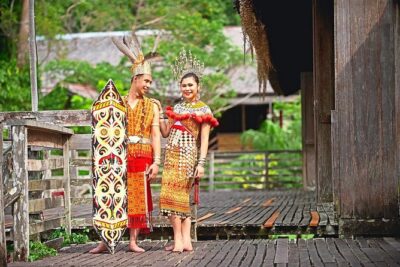

Browse the lists this tour appears in