
Reviewed · HISTORICAL TOURS
Kuala Lumpur Cultural & Heritage Most Iconic Locations
Kuala Lumpur’s modern skyline makes more sense after you walk its older streets. This private half-day tour links Chinese clan houses, Hindu and Buddhist temples, an Islamic mosque, colonial-era buildings, and the old market district into one compact route. I especially like the multicultural focus and the fact that you can cover several central areas without sorting out taxis or trains.
I also like the private format, which gives you a better chance to ask questions or shape the conversation around your interests. Guides Raja and Dhevan have been singled out for clear explanations, friendly service, and useful help with planning other outings. The main caution is price: at $119.73 per person, this is a serious spend for three and a half hours, especially if your main goal is simply to photograph the buildings.
Key points to know before booking
- Seven central stops in 3.5 hours: The route gives you a quick but useful introduction to old Kuala Lumpur.
- A true cross-section of cultures: Chinese, Hindu, Buddhist, and Islamic landmarks all appear in one tour.
- Private vehicle and hotel service: Pickup and drop-off are included at selected hotels, with an air-conditioned vehicle.
- Guides can shape the day: Raja and Dhevan received especially strong praise for history, cultural explanations, and adapting to personal interests.
- Jamek Mosque has a Friday limitation: On Fridays, the mosque is closed to this visit, so you will see it from outside only.
- Value depends on your priorities: The price makes more sense for a first visit, a short stay, or anyone wanting a private guide rather than a basic city transfer.
Why this half-day route works in Kuala Lumpur
Kuala Lumpur can feel scattered at first. The Petronas Towers, old Chinatown, Merdeka Square, mosques, markets, and temples are not all in one tight block, and the city’s traffic can eat into a short visit.
This tour solves that problem with a simple plan. You move between key sites in a private vehicle, then spend about 20 minutes at each stop. That is not enough time for long museum visits or detailed worship, but it is enough to see the main architectural features, hear the story behind each place, and decide where you want to return later.
The experience is best understood as a guided introduction, not a deep archaeological tour. You will see the framework of Kuala Lumpur’s cultural story: Chinese migration and clan networks, Indian Hindu worship, Islamic architecture, colonial administration, and the market life that tied these communities together.
Because it is private, the pace can feel less hurried than a large group outing. Still, seven stops in three and a half hours is brisk. If you like photographs, short walks, and clear background before exploring alone, the timing should suit you. If you want to sit quietly inside every temple or spend an hour shopping at Central Market, you will need extra time elsewhere.
More Historical Tours in Kuala Lumpur
- Kuala Lumpur: Batu Caves & Historic Buildings Tour
★ 4.7 · 539 reviews - From Kuala Lumpur: Private Batu Caves Cultural Tour
★ 4.4 · 410 reviews - Private Half-day Batu Caves and Cultural Tour Kuala Lumpur *2026*
★ 5.0 · 165 reviews
Chan See Shu Yuen Temple and the Chinese clan tradition
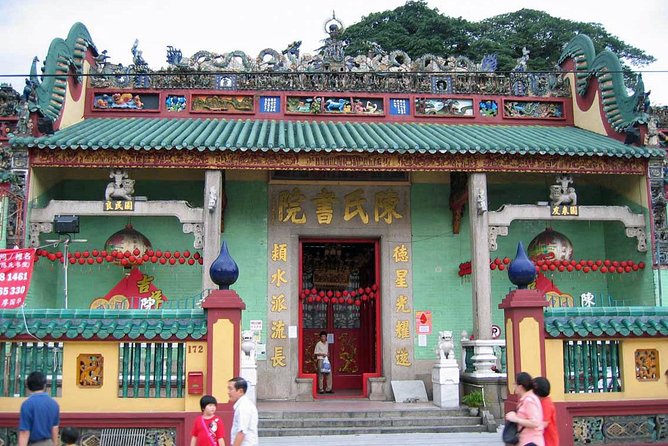
The tour begins at Chan See Shu Yuen Temple, also described as a clan house. You get about 20 minutes here, with admission included.
This stop introduces an important part of early Chinese community life in Malaysia. A clan house was more than a place of worship. It helped people with shared family roots maintain a social network, preserve traditions, and support one another in a new country.
Look closely at the roofline, carved decoration, and the way the building combines religious and community functions. Your guide can help explain details that are easy to miss if you simply walk past with a camera.
The short stop is useful because it gives the rest of Chinatown more meaning. You are not seeing old Chinese buildings as isolated decorations. You are seeing them as part of a community structure that helped shape the city.
Chinatown’s pre-war streets and old shopfronts
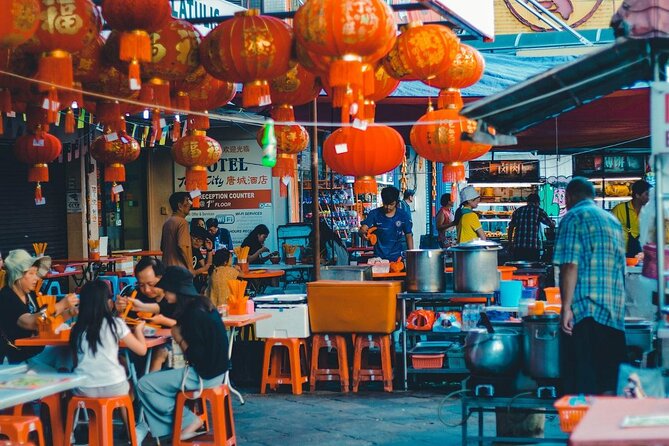
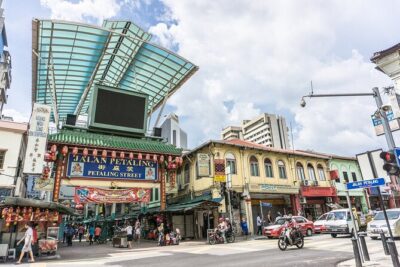
Next comes Chinatown, with about 20 minutes to look at pre-war buildings. This is one of the easiest sections of the tour to understand visually. Narrow streets, older facades, shopfronts, and the crowded urban layout show how different Kuala Lumpur was before its high-rise era.
The word pre-war refers to buildings that survived from before the Second World War. Their value is not only architectural. They show how trade, housing, food, worship, and daily work were often packed into the same district.
You should use this stop to notice the contrast between old and new Kuala Lumpur. Modern towers may be only a short ride away, but here the scale changes to low-rise streets and older commercial buildings.
Twenty minutes goes quickly. You may have time for photographs and a short walk, but not a full shopping session. If you want to browse Chinatown at length, ask your guide about returning after the tour.
Sri Maha Mariamman Temple, Kuala Lumpur’s oldest Hindu temple
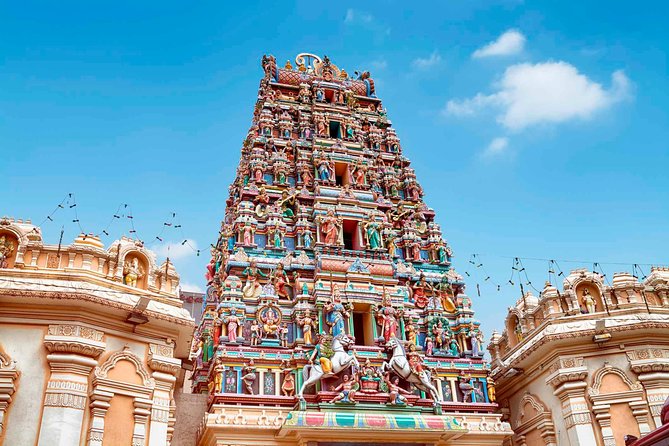
Sri Maha Mariamman Temple sits at the edge of Chinatown on Jalan Bandar. Founded in 1873, it is identified as the oldest Hindu temple in Kuala Lumpur.
This is one of the most important stops for understanding the city’s Indian Hindu community. The temple’s presence beside Chinatown also makes the point that Kuala Lumpur’s communities were not sealed off from one another. Religious buildings from different traditions developed close together in the growing city.
You will have roughly 20 minutes here. Take time to look at the entrance tower, religious figures, colors, and decorative work. Dress and behavior matter at an active place of worship, so follow the guide’s instructions and avoid treating the temple like a photo set.
The short visit is enough for an introduction, but it may feel limited if you want to study the design or ask detailed questions about Hindu practice. This is one reason the private format helps. You can use the time for focused questions instead of listening to a general speech meant for a large crowd.
More Sightseeing Tours in Kuala Lumpur
- The Best of Kuala Lumpur Classic
★ 5.0 · 675 reviews - Kuala Lumpur: Full-Day Private City Highlights Tour
★ 4.6 · 589 reviews - The Best of Kuala Lumpur Sunset and Night tour
★ 5.0 · 318 reviews - Kuala Lumpur Notable Landmarks & City Highlights Tour
★ 4.0 · 305 reviews
Central Market, built in 1930
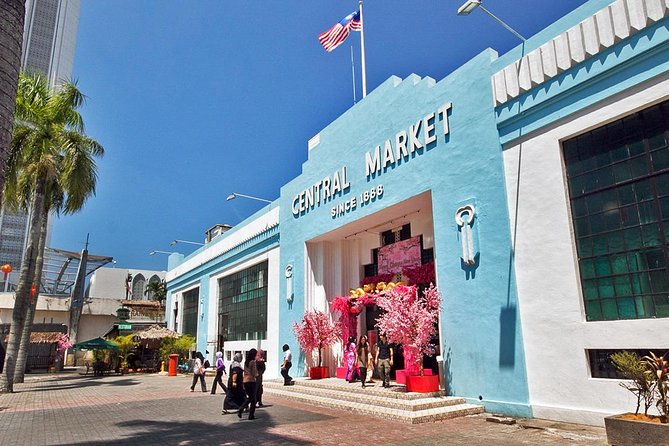
Central Market was built in 1930 and gives the tour a different angle. The temples and mosque show faith and community. The market shows commerce, craft, and the daily exchange of goods.
You get around 20 minutes, which is enough to understand the building’s role and look at the market setting. It is not enough for leisurely browsing, so keep your expectations practical. This stop is about context first and shopping second.
I like Central Market in this route because it connects the cultural sites to ordinary city life. Kuala Lumpur was not shaped only by grand buildings or religious institutions. Markets helped bring people, products, languages, and customs together.
If you plan to buy souvenirs, ask whether you can return on your own after the formal tour. Food and drinks are not included, so you should not count on a meal here as part of the experience.
Sin Sze Si Ya Temple and the city’s Chinese religious roots
The Sin Sze Si Ya Temple, built in 1880, adds another layer to the Chinese story. After seeing a clan house and the surrounding Chinatown streets, you can compare the temple’s religious role with the clan house’s community role.
Again, the scheduled visit is about 20 minutes. That makes the guide important. A clear explanation can turn a quick stop into a useful lesson about how Chinese religious and social traditions took root in Kuala Lumpur.
Pay attention to the contrast between this temple and Sri Maha Mariamman Temple. The buildings serve different faiths and traditions, yet both are part of the same central urban district. That close grouping is one of the strongest features of this tour.
Jamek Mosque and the Friday restriction
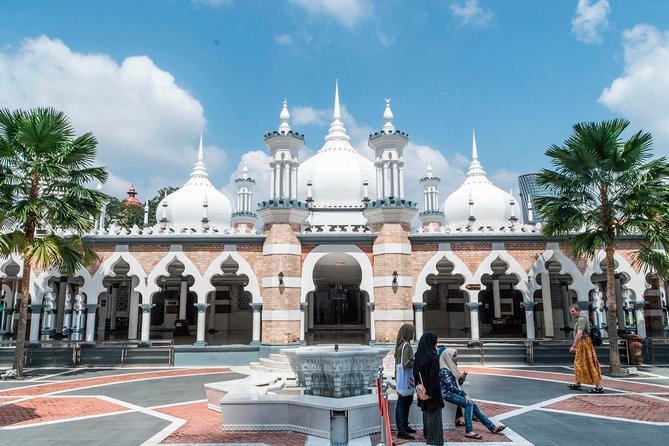
Jamek Mosque brings Islamic architecture into the route. The design is described as North Indian Islamic architecture, making it a useful comparison with the Chinese and Hindu buildings seen earlier.
There is an important catch. The mosque is closed on Friday, and on that day you will view it from outside only. This is not a small detail if visiting a Malaysian mosque is your main reason for booking.
Even on another day, the tour data does not promise an interior visit. Treat Jamek Mosque as an architectural and historical stop, and confirm the day’s access conditions when arranging your plans.
One past booking went badly when the planned mosque visit did not match expectations, so I would be direct here: if entering a mosque is essential, contact the operator before paying and ask exactly what you will be able to see. That simple check can prevent disappointment.
Sultan Abdul Samad Building and Merdeka Square
The final main stop is the Sultan Abdul Samad Building at Merdeka Square. You get about 20 minutes to see one of Kuala Lumpur’s best-known historic civic settings.
The building’s design gives the route a different visual note, with Islamic influence tied to the city’s colonial-era public architecture. Merdeka Square also helps place Kuala Lumpur’s political story beside its religious and commercial past.
This is a good final stop because you can connect the earlier pieces. Chinese community buildings, Indian Hindu worship, Islamic architecture, markets, and civic institutions all sit within the same broad central area.
The visit is mainly exterior viewing. If you want extended photographs, shade, or a slower look at the square, the fixed schedule may feel tight. Comfortable shoes, a hat or cap, and protection from the sun are sensible choices.
What the private vehicle and guide add
Hotel pickup and drop-off are included at selected hotels. You travel in an air-conditioned vehicle with a professional licensed guide and an English-speaking driver, so the experience is easier than arranging each central stop yourself.
The private format matters most for questions and pacing. If you are interested in Malaysian history, religious practice, architecture, or food districts, you can steer the conversation. Raja has been praised for explaining Malaysian culture and helping with plans for independent outings. Dhevan has also received strong praise for clear historical explanations and an impressive grasp of the cultural buildings.
That does not mean every departure will feel identical. A guide’s quality can shape a private tour considerably, so asking for Raja or Dhevan, if scheduling allows, may be worthwhile. The vehicle is convenient, but the tour still includes walking and outdoor time. Wear comfortable shoes and bring a hat or cap.
Is $119.73 per person fair value?
At $119.73 per person, this tour is not a bargain city loop. The cost pays for private transportation, hotel pickup and return at selected hotels, a licensed guide, an English-speaking driver, and a route designed for your group alone.
The price makes the most sense in three situations. You have only a short time in Kuala Lumpur, you want a private guide, or you prefer having transport between several cultural sites. It can also work well for a couple or small family that values convenience and personal questions.
The value is harder to justify if you mainly want exterior photographs. The stops are short, food is not included, and the tour lasts about three and a half hours. If you recently booked a Batu Caves outing at around one third of this price, this tour may feel expensive by comparison.
The strongest reason to pay more is interpretation. A good guide can explain why a clan house matters, how the temples fit into the city’s development, and why the mosque and civic buildings belong in the same cultural story. Without that explanation, you could see many of these places independently for less.
Who should book this experience?
I would recommend it to first-time visitors, people on a short Kuala Lumpur stay, and anyone who wants a broad cultural introduction without handling transport. It also suits visitors who prefer a private setting and want to ask questions about Malaysia’s different religious and ethnic traditions.
It is a good match for families and mixed-interest groups because the route changes subject often. One person may prefer temples, another may like old buildings, and someone else may enjoy the market district.
I would be more cautious if you want a slow walking tour, a full meal, long shopping time, or guaranteed mosque entry. The schedule is compact, and Friday brings a clear limitation at Jamek Mosque.
Free cancellation is available if you cancel at least 24 hours before the start time. Changes or cancellations within 24 hours are not accepted for a refund. Most people can participate, and the route is near public transportation, but selected-hotel pickup must be confirmed.
Final booking advice for this Kuala Lumpur heritage tour
Book this tour if you want the city’s major cultural threads explained in one private morning or afternoon. Its best features are the range of traditions, the efficient central route, and the chance to work with a guide such as Raja or Dhevan.
Skip it if your priority is low cost or long visits inside each site. Before booking, confirm your hotel pickup, ask about mosque access for your date, and decide if three and a half hours of private guiding is worth the premium. For a first look at Kuala Lumpur’s older cultural districts, it offers a clear and convenient start.
FAQ
How long does the Kuala Lumpur cultural tour last?
The tour lasts approximately 3 hours and 30 minutes.
Is this a private tour?
Yes. Only your group participates in the activity.
Is hotel pickup included?
Hotel pickup and drop-off are included for selected hotels. Confirm that your hotel is covered when booking.
What type of vehicle is used?
Private transportation is provided in an air-conditioned vehicle.
Is an English-speaking guide included?
Yes. The tour includes an English-speaking driver and a professional licensed tour guide.
Is Jamek Mosque open during the tour?
Jamek Mosque is closed on Fridays, when you will view it from outside only. The supplied tour details do not guarantee interior access on other days.
Are meals and drinks included?
No. Food and drinks are not included, and lunch is excluded.
Can I cancel for a full refund?
Yes, if you cancel at least 24 hours before the experience start time. Cancellations within 24 hours are not refunded, and changes within that period are not accepted.
Just added around Kuala Lumpur
- Walk & Discover KL’s Architectural and Heritage Gems★ 5.0 · 7 reviews
- Private Transfer: Kuala Lumpur International Airport to or from Hotel★ 4.5 · 14 reviews
- Transit Tour Private Tour (Ex Port Klang Cruise Centre/KLIA 1 &2)★ 5.0 · 10 reviews
- Private Port Klang Cruise to Kuala Lumpur City Tour★ 5.0 · 3 reviews
- Private Kuala Lumpur Shore Excursions★ 4.5 · 22 reviews
- Kuala Lumpur City & Batu Caves Temple Private Tour★ 4.5 · 3 reviews
- Kuala Lumpur International Airport Transfers★ 5.0 · 4 reviews
- Kuala Lumpur Airport Transit Tour (4 hours)★ 5.0 · 12 reviews
Historical Tours, compared.
Historical Malacca Guided Day Tour (Shared Tour)
Read our review →
Historical Malacca Day Tour from Kuala Lumpur (Private Tour)
Read our review →
Private Half-day Batu Caves and Cultural Tour Kuala Lumpur *2026*
Read our review →
Malacca Historical Private Tour With Personal Chauffeur
Read our review →Browse the lists this tour appears in