
Reviewed · LANGKAWI TOURS
Birdwatching Tour in Langkawi
Langkawi’s best bird sightings may be small and far away, but the prize birds can be impressive: great hornbills, pied hornbills, mountain hawk-eagles, and kingfishers. This four-hour outing moves between wet areas and mountain forest, giving you a good look at two very different sides of the island.
I like the small maximum group of eight and the use of local guides such as Sham, Afie, and Ikram. I also like that the tour follows responsible birding rules: no feeding, baiting, or fake bird calls. The main drawback is simple: birds do not perform on schedule, and non-birders may find the long periods of quiet looking through binoculars slow.
Key points at a glance
- Great hornbill sightings are a real possibility: You may also see pied hornbills, mountain hawk-eagles, kingfishers, egrets, herons, and migratory birds.
- Two habitats in one morning or afternoon: The route can include a village pond or wetland area, then rainforest sites near Langkawi’s highest peak.
- Local guides do the hard spotting: Guides such as Sham and Afie have helped visitors find birds tucked under branches or high in the canopy.
- Responsible birdwatching matters here: The operator does not feed birds, use bait, or play bird calls to bring them closer.
- Hotel pickup keeps the outing easy: Return transport from any Langkawi hotel, binoculars, a scope, and bottled water are included.
- Bring the right clothing: Wear long trousers, long sleeves, walking shoes, a hat, sun protection, and earth-colored clothing.
Why Langkawi works well for a birdwatching morning
Langkawi is more than beaches and cable-car views. Its ponds, mangroves, open fields, and rainforest slopes support a useful mix of waterbirds and forest species. That variety is the main reason this tour is more interesting than simply sitting beside one pond and waiting.
At lower elevations, you may look for whistling ducks, egrets, herons, pond herons, and kingfishers. Later, the setting shifts toward mountain forest, where hornbills and raptors become the main targets. The change in habitat gives the four hours a clear purpose.
I would choose the morning departure if birds are your priority. The listed start time is 7:30 am, which gives you an early beginning before the heat becomes a bigger problem. An afternoon option is available, and it may suit families or visitors who prefer a slower start, but bird activity and light can vary.
The tour is best understood as a search rather than a parade of guaranteed sightings. You may get several excellent birds, or you may spend time waiting for one good view. That uncertainty is part of ethical birdwatching, since the guide does not lure birds with food or recorded calls.
A few more Langkawi half-days to weigh up
- Langkawi: Kilim Mangrove Boat Tour with Lunch and Pickup
★ 4.8 · 899 reviews - Langkawi : Premium Jet Ski Tour Including Dayang Bunting Island
★ 5.0 · 704 reviews - Langkawi Jet Ski Tour Dayang Bunting Free Drone Video
★ 4.8 · 517 reviews
From village ponds to rainforest slopes
The route begins with hotel pickup and then moves through several birding settings. Only one formal itinerary stop is named, JungleWalla, but the tour description places the experience between a village pond and viewpoints near Langkawi’s highest peak.
The pond and wetland sections are useful early targets. Open water makes it easier to scan for ducks, egrets, herons, and kingfishers. A field full of egrets and pond herons has been part of the experience for some visitors, giving you a chance to see several common waterbirds in one place.
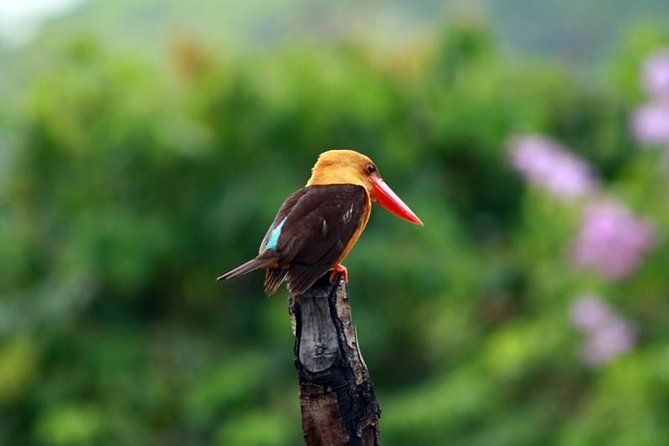
Kingfishers are among the more rewarding targets. They may sit quietly on a branch before dropping toward the water, so your guide’s spotting skill matters. One particularly memorable sighting included a common kingfisher holding a fish. You should bring patience, since these birds may remain distant and disappear quickly.
The forest section changes the rhythm. Hornbills often sit high in trees, and their large size helps, but they may still be difficult to photograph. The great hornbill is the headline sighting, with pied hornbill also possible. Some visitors have seen four kingfishers on one outing and as many as 23 different bird species, but those numbers depend on weather, season, patience, and luck.
You may also see monkeys, eagles, or a mountain hawk-eagle. A mangrove viper has been spotted during one outing, though it should be treated as an unexpected bonus rather than part of the promised wildlife list.
The guides make the difference
Birdwatching is much easier with someone who knows where to look. A good guide can notice a shape beneath a branch, a movement in the canopy, or a bird calling from somewhere you would otherwise ignore.
Afie has been praised for finding birds that were easy to miss, including kingfishers and oriental hornbills. Her instructions may be precise, such as looking beneath a certain branch or under the second branch. That kind of help changes the outing from staring into trees to finding actual birds.
Sham brings useful context about mangroves and why they need protection. That matters because the tour is not only about checking species off a list. You also learn how wet areas support birds and other wildlife. Ikram and the driver have been described as caring and helpful, with attention given to plants as well as birds.
The exact guide depends on the date, but the tour is led in English by a local nature guide. If you have target species, tell the operator in advance. The team promises to make a strong effort, but it does not promise a particular bird.
What the equipment and small group mean
Binoculars are included, and a scope is available for distant birds. That saves you from renting equipment, which is useful if you are new to birding or have packed light. Still, I would bring your own binoculars if you own a good pair. Familiar equipment is quicker to focus, and you will not have to share or adjust unfamiliar gear.
The group is limited to eight people. That is a useful size for this activity. A guide can point out a bird and move the scope without managing a crowd, while you still have company during quiet stretches.
The small group does not solve every problem. If a bird is high in a tree or across an open field, photographs may remain difficult. One honest limitation of birdwatching in Langkawi is that many subjects can be distant. The scope may give you a fine view through the glass, but your camera may produce only a small shape.
For photography, bring a camera with a long lens if you have one. Keep your expectations realistic. This is better for finding birds and learning to identify them than for collecting close-up portraits of every species.
Same base, a completely different kind of day:
- 5 Hours Sharing Basis Kilim Mangrove Safari Boat Tour in Langkawi
★ 5.0 · 504 reviews - Langkawi: Mangrove River Cruise Sharing 3 Hours
★ 4.6 · 474 reviews - Langkawi: UNESCO Global Geopark Mangrove Cruise
★ 4.9 · 383 reviews - Langkawi : Kilim Geoforest Mangrove Kayak Tour with Lunch
★ 4.9 · 358 reviews
Price and practical value at $82
At $82 per person, this is not the cheapest way to spend half a day in Langkawi. The value comes from what is bundled into the price: return hotel transport, an English-speaking nature guide, binoculars, a scope, and bottled water.
Transport matters more than it first appears. Birding sites are spread across different types of habitat, so a private or organized transfer lets you cover more ground than walking from a beach hotel. You also avoid arranging separate taxis for an early start.
The guide is the most important part of the cost. Without one, you might see a large egret or duck, but miss a kingfisher tucked into vegetation or a hornbill high above you. The guides have helped people find birds that were almost invisible until pointed out.
The value is strongest for committed birders, families with children who already enjoy wildlife, and photographers who understand that good subjects may be far away. If you simply want a general nature trip, $82 may feel high, especially if four hours of quiet observation does not sound appealing.
There must be at least two people per booking. That makes this unsuitable for a solo visitor booking alone unless you can join another arrangement. The maximum is eight people, so you are not paying for a large coach-style excursion.
What to wear and pack for the outing
Dress for heat, sun, and walking. The recommended clothing is:
- Long-sleeved shirt
- Long trousers
- Comfortable walking shoes
- Hat
- Strong sun protection
- Earth colors such as green, brown, or black
Avoid bright red, yellow, and white clothing. Subdued colors are less likely to draw attention in quiet birding areas. Long sleeves and trousers also give you more protection from sun and vegetation.
Bottled water is included, but food and other drinks are not. Eat before pickup if you are joining the 7:30 am departure, and carry any extra snack you may need if the operator permits it. The tour lasts about four hours, so planning ahead is sensible.
A personal pair of binoculars is helpful, but not essential. You may also want a notebook or bird checklist. If you have specific targets, send the list before the tour so the guide can plan around your interests.
Weather can change the experience. One outing continued in rain, with the guides adjusting as they moved between sites. The activity requires good weather, however, and a cancellation caused by poor conditions brings an offer of another date or a full refund.
Is it suitable for families and beginners?
Yes, with one important condition: your family should enjoy waiting, watching, and listening. The tour is family-friendly, but it is not a fast-moving wildlife show. Children who like spotting games may have fun finding birds in branches and learning the difference between an egret, heron, hornbill, and kingfisher.
Beginners can also join. You do not need to know bird names before starting. The guide supplies the missing knowledge and helps you find birds you would probably overlook.
The experience is less suitable if you want constant action or close animal encounters. You may spend several minutes looking through binoculars at a bird that is still far away. That can be thrilling for a birder and tiring for someone who joined only for a general island excursion.
A moderate level of physical fitness is required. The tour includes moving between natural sites and walking, though the supplied information does not give a precise distance or trail difficulty. Wear proper shoes and be ready for heat, uneven ground, and possible rain.
Ethical birdwatching without shortcuts
JungleWalla follows BirdLife International guidelines for responsible bird tourism. In plain terms, the guide will not feed birds, use bait, or play bird calls to pull them toward the group.
That policy may reduce the chance of a close sighting, but it protects the animals and keeps the experience honest. You are seeing birds in their normal setting, not watching wildlife respond to a performance arranged for visitors.
This also makes the tour a useful introduction to conservation. Sham has discussed the importance of preserving mangroves, and the setting helps explain why wetlands matter. Birds, reptiles, monkeys, and plants all depend on these places.
I consider this a strong point, especially for families. You get a better lesson from watching a bird behave naturally than from seeing one rush toward food placed by a guide.
Booking details and cancellation terms
The standard start time is 7:30 am, with a choice of morning or afternoon departure. Pickup and return transport are offered from hotels in Langkawi. Confirmation is provided at booking, and the tour accepts mobile tickets.
Check the pickup details with the operator before the day of the tour. One outing had a communication mix-up because the operator had not received the booking information, so a quick confirmation is a wise precaution.
You can cancel for a full refund up to 24 hours before the local start time. Changes or cancellations made within 24 hours are not accepted for a refund. If poor weather forces the operator to cancel, you can choose another date or receive a full refund.
Should you book the Langkawi birdwatching tour?
Book it if you want a real wildlife search, not a quick stop for a few easy photographs. The strongest reasons are the local guides, the range of habitats, hotel transport, and the chance to see great hornbills, kingfishers, eagles, and waterbirds without using bait or calls.
I would especially recommend it to birders who have a target list, families with patient children, and visitors who want a quieter side of Langkawi. Tell the operator your target birds in advance and wear muted clothing with good walking shoes.
Skip it if you dislike waiting, need guaranteed close-up wildlife, or are joining only because you have a spare morning. Birds can be distant, and the most exciting moments may last only a few seconds. For the right person, that sudden glimpse of a hornbill or kingfisher is exactly what makes the outing worthwhile.
FAQ
How long does the birdwatching tour last?
The tour lasts approximately four hours.
What time does the tour start?
The listed start time is 7:30 am. A choice of morning or afternoon departure is available.
Is hotel pickup included?
Yes. Return transfers from any hotel in Langkawi are included.
Are binoculars provided?
Yes. Binoculars are included for use, and a scope is also available. Bringing your own binoculars is advised if you have them.
What birds might I see?
Possible sightings include whistling ducks, egrets, herons, pond herons, kingfishers, oriental hornbills, pied hornbills, great hornbills, mountain hawk-eagles, and migratory birds. Wildlife sightings are not guaranteed.
Can I cancel for a full refund?
Yes. You must cancel at least 24 hours before the local start time for a full refund. If poor weather causes the operator to cancel, you can receive a full refund or choose another date.
Just added around Langkawi
- Underwater World Langkawi Admission Ticket★ 3.4 · 5 reviews
- Exclusive Langkawi: Your Private Island Adventure Awaits★ 5.0 · 19 reviews
- Sharing Half Day Mangrove Boat Tour With Lunch in Langkawi★ 4.5 · 16 reviews
- Private Tour to Langkawi Cable Car & Tanjung Rhu Beach★ 5.0 · 27 reviews
- Private Stand Up Paddle Trip in Tanjung Rhu★ 5.0 · 24 reviews
- Private Langkawi Mangrove Forest Boat Tour Tg Rhu with Lunch★ 4.5 · 5 reviews
- Private Telaga Tujuh Waterfalls and Hidden Blue Pool★ 4.5 · 7 reviews
- Langkawi SkyBridge, Cable Car and Refreshing Natures Private Tour★ 4.5 · 15 reviews
Langkawi Tours, compared.


Premium Jet Ski Tour Including Dayang Bunting Island
Read our review →
5 Hours Sharing Basis Kilim Mangrove Safari Boat Tour in Langkawi
Read our review →
Browse the lists this tour appears in