
Reviewed · BATIK & CRAFT WORKSHOPS
Batik Bag Painting Workshop by myBatik
Traditional Malaysian batik is more than a pretty pattern on fabric. It is a hands-on process using hot wax, dye, and careful color work. At myBatik, you create a 34-centimeter calico cotton bag from a plain piece of fabric, then take it home as a useful souvenir.
I like two things right away: the class lets you work through the full wax-resist process, and it is a private activity for your own group. The fee also covers the materials, demonstration, apron, rubber gloves, and workshop certificate. The main consideration is the location in Ampang Jaya rather than central Kuala Lumpur, and the published meeting details list a 10:30 am start by appointment.
Key things to know before you book

- You make a usable souvenir: The finished bag is a 100 percent calico cotton tote measuring about 13 inches, or 34 centimeters, across.
- You learn the full process: The session covers wax application, color selection, painting, color mixing, and wax removal.
- Your group works privately: Only your party takes part, which is helpful for families and small groups.
- Everything needed is supplied: Materials, a demonstration, apron, rubber gloves, local taxes, and a certificate are included.
- There is more to see afterward: You can visit the batik gallery and use Green Tomato Cafe for breakfast, lunch, or snacks.
- Check the schedule carefully: The meeting information gives 10:30 am and says the workshop is by appointment, despite classes being offered throughout the day.
What you are really doing at myBatik
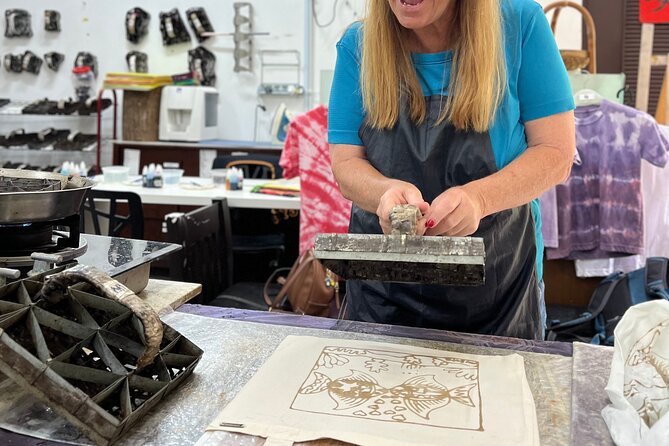
The workshop teaches batik through the wax-resist method. You begin with an undyed fabric bag and create areas that will resist the dye by applying wax. You then paint the remaining sections and watch the pattern take shape as the colors settle into the cotton.
This makes the class more satisfying than a simple paint-and-take craft session. You are not just decorating a ready-made souvenir. You are learning why batik patterns have distinct lines, separated color areas, and a slightly handmade look.
The process has been practiced in Southeast Asia for hundreds of years. Malaysian batik has its own color choices and pattern styles, though you are not limited to copying a traditional design. You can work with a conventional Malaysian pattern or create something from your own imagination.
That freedom matters. Some people want a tidy, traditional-looking bag. Others would rather experiment with bright blocks of color or a loose personal design. The workshop allows for both approaches.
More batik and pewter workshops near Kuala Lumpur:
- Batu Caves & Malaysian Handicraft Tour: Pewter & Batik Experience
★ 4.5 · 316 reviews - Batu Caves and Sari Experience with Batik Workshop
★ 5.0 · 181 reviews - Batik Coloring Workshop by myBatik
★ 5.0 · 48 reviews
The 90-minute class, step by step
Starting with the batik demonstration
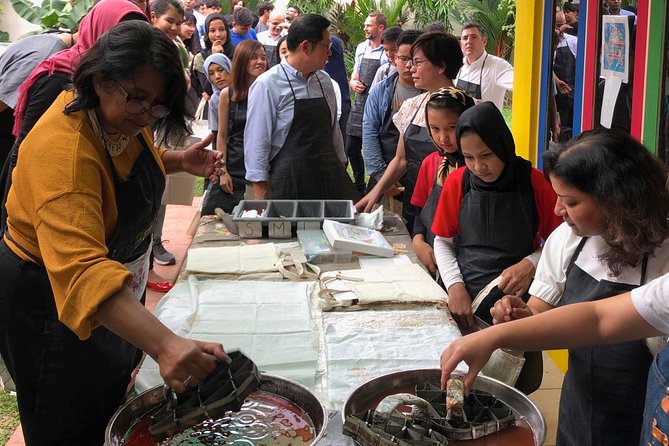
The session begins with an explanation of how batik painting works. A demonstration is included, so you can see how the wax and paint behave before starting on your own bag.
This is useful because wax-resist work has a clear order. The wax needs to define the areas you want to protect, while the paint fills the spaces around those lines. Once you understand that basic relationship, the rest of the class becomes much easier to follow.
An apron and rubber gloves are included. That is a small but important detail, especially if you are bringing children or anyone who does not want paint on their clothes.
Drawing and waxing your design
You start with the blank calico bag and plan a pattern. The supplied details do not specify a fixed template, so you should expect to make creative choices rather than simply color in one standard picture.
Wax is then used to create the resist lines. These lines help keep color from spreading into neighboring areas and give the finished batik its recognizable structure.
This is the part where patience pays off. A rushed design may leave less room for careful color work. I suggest keeping your first pattern fairly clear and not trying to fit too many tiny details onto a 34-centimeter bag.
More hands-on workshops near Kuala Lumpur:
- LaZat Malaysian Cooking Class
★ 5.0 · 87 reviews - Malaysia Cooking Classes With Local
★ 5.0 · 87 reviews - New Malaysian Kitchen Cooking Class and Garden Tour
★ 5.0 · 54 reviews - Market Visit & Private Hands-on Cooking Class at Daun Senja
★ 5.0 · 51 reviews
Choosing and mixing colors
You can choose your own colors and practice mixing primary colors to create secondary shades. This gives the class a small art lesson as well as a cultural one.
The color-mixing option is especially useful for children and families. It turns the activity into a simple experiment: start with basic colors, combine them, and see what you can make. Adults who prefer a more controlled design can keep to a planned palette.
The information provided does not name a specific instructor, so you should not book this expecting a particular guide. The appeal is the process and the equipment supplied, not a celebrity teacher or formal museum lecture.
Painting the cotton bag
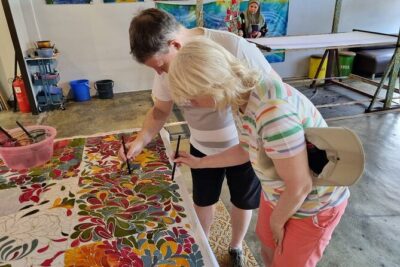
Once the wax pattern is ready, you fill the sections with paint. The aim is not perfect machine printing. Batik has a handmade quality, and small changes in brushwork or color intensity are part of the result.
You may find the painting stage the most relaxing part of the class. You can concentrate on one section at a time and see the plain bag become personal. If you are working with children, the adult can help with the more careful parts while letting the child choose colors and fill larger areas.
The 90-minute length is enough to make this a proper activity without taking up half a day. Still, you should arrive ready to work rather than expecting a long break between each stage.
Removing the wax and seeing the result
At the end, the wax is removed to reveal the completed pattern. This final step gives the bag its finished look and shows how the protected sections shaped the design.
That reveal is one of the best reasons to choose a process-based workshop. You do not see the final effect immediately. The pattern changes as the wax comes away, and your finished bag has a direct connection to the work you did during the class.
You take home the completed calico cotton bag. It is not just a decorative token, but a practical item with room for everyday use.
Why the private format works well for families
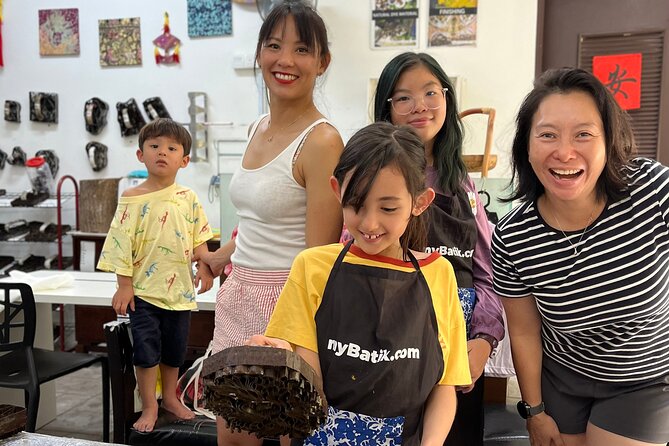
This is a private tour, so only your group participates. That makes the workshop easier to manage than a large shared class, particularly if you are traveling with children or several generations.
Children below age seven must be accompanied by an adult. The activity is described as family-friendly, and most people can participate, but young children may need close help with the wax, paint, and timing.
The private setup also gives your group more room to work at its own pace within the 90-minute session. You can focus on making the bag rather than comparing your progress with strangers.
At the same time, private does not mean highly customized in every detail. The workshop follows the same basic batik process, and no individual instructor names or special themes are provided. Choose it for shared creative time, not for an advanced art course.
The batik gallery and Green Tomato Cafe
After the workshop, you have access to a nearby batik gallery. This gives you a chance to look at batik beyond the small bag you have just painted and to place your own work in a wider Malaysian art setting.
The gallery is also helpful if you want to buy or compare finished batik pieces, though the supplied information does not state that purchases are included in the workshop price. Treat the gallery as an additional stop, not part of the paid materials.
Green Tomato Cafe is inside the myBatik center. It offers all-day breakfast, lunch, and snacks, along with drinks. Since food is not included in the $42 fee, the café can make the visit easier if you want to eat before or after the class.
This is a practical advantage for families. You do not need to find a separate restaurant immediately after the workshop, and you can give children a break after the hands-on work.
Location, timing, and getting there
The meeting point is myBatik at 51, Embun Kemensah, Jalan Tiara Kemensah 3, 68000 Ampang Jaya, Selangor, Malaysia. It is described as a short distance from the Kuala Lumpur Twin Towers and downtown attractions, with public transportation nearby.
That wording is useful, but you should still plan the journey rather than assume this is a walk from the Petronas Twin Towers. Transportation to and from attractions is not included. Your booking confirmation should be checked for the exact meeting instructions.
The published start time is 10:30 am, and the activity is available only by appointment. Other information says classes are offered throughout the day. These details are not perfectly aligned, so contact myBatik if you need a different time or are planning the workshop around another Kuala Lumpur booking.
One schedule detail deserves attention: the supplied itinerary lists Zoo Negara as Stop 1, while the meeting point, activity description, and end point all center on myBatik. That may be a scheduling or listing error. Confirm the exact plan before booking if Zoo Negara is important to your day.
The activity ends back at the meeting point. It does not include transportation to another attraction afterward.
Is $42 a fair price?
At $42 per person, this is not the cheapest souvenir activity in Kuala Lumpur. You are paying for more than a blank bag and a few paints, though. The price includes instruction, a demonstration, all materials, protective clothing, rubber gloves, a certificate, and local taxes.
The private format improves the value for a family or small group. You are not paying for a large class where your questions compete with many other people. You also finish with a usable cotton bag rather than a disposable craft.
The value is weaker if you only want a quick activity or if you are not interested in making art. The 90 minutes are built around participation, so you need to enjoy the process to feel that the price is worthwhile.
I would compare it with the cost of a standard souvenir, a meal, and a paid cultural attraction. Here, you get a lesson and an object that carries your own design. For families, that combination can justify the fee. For solo visitors on a tight budget, it is a more deliberate purchase.
What the strongest praise tells you
The most positive part of the available feedback is the sense of learning. One detailed account describes a grandmother and granddaughter enjoying the equipment and coming away feeling that they understood the craft.
That points to the workshop’s real strength. It is not only about filling in colors. The equipment and demonstrations help you understand the stages of batik decorating, from the blank fabric to the wax removal.
The same account describes the experience as delightful, but the more useful takeaway is the shared learning. A grandparent and child can work side by side, compare designs, and leave with a clearer idea of how Malaysian batik is made.
The published rating is 5 out of 5 from 35 reviews, with 100 percent recommending it. That is a strong record, though the sample is still limited. I would place the greatest weight on the practical details: the class is private, the equipment is supplied, and the finished bag is yours to keep.
Who should book this batik workshop?
I would choose this for:
- Families looking for a creative Kuala Lumpur activity
- Couples who want a handmade souvenir
- Visitors interested in Malaysian culture through a practical lesson
- Small groups who prefer a private session
- Anyone who likes painting, design, or simple craft projects
- People with enough time to reach Ampang Jaya for a 90-minute appointment
I would think twice if you want a major historical tour, a long guided visit, or a centrally located activity with transport included. This is a focused art workshop, not a broad introduction to Kuala Lumpur.
It also may not suit someone who dislikes making choices or getting involved. You will be selecting patterns and colors, handling wax and paint, and accepting that the finished bag will look handmade.
Booking and cancellation details
Confirmation is provided at the time of booking, and the activity uses a mobile ticket. Free cancellation is available if you cancel at least 24 hours before the local start time.
A cancellation made less than 24 hours before the start is not refunded, and changes within that period are not accepted. Service animals are allowed, and the center is near public transportation.
Should you book the myBatik workshop?
Book it if you want to do something with your hands and leave Kuala Lumpur with a souvenir you helped create. The full process, private format, family-friendly setup, gallery access, and café on site make the $42 fee reasonable for the right person.
Before paying, confirm the exact start time and meeting plan. The 10:30 am appointment detail and the Zoo Negara itinerary note need clarification. Once those logistics are settled, this is a good choice for a relaxed cultural activity that teaches you something real and gives you a bag with a personal story.
FAQ
How long does the batik bag workshop last?
The workshop lasts approximately 90 minutes.
Where does the workshop take place?
It takes place at myBatik, 51, Embun Kemensah, Jalan Tiara Kemensah 3, 68000 Ampang Jaya, Selangor, Malaysia.
What time does the workshop start?
The published start time is 10:30 am. The activity is available only by appointment, so confirm the time when booking.
What do I make during the class?
You paint a 100 percent calico cotton bag using the Malaysian batik wax-resist technique. The bag measures about 13 inches, or 34 centimeters, across.
Are materials included?
Yes. The fee includes all materials, a batik demonstration, an apron, rubber gloves, a workshop certificate, and local taxes.
Can children take part?
Yes. The workshop is described as family-friendly. Children below age seven must be accompanied by an adult.
Is the activity private?
Yes. Only your group participates in the activity.
Is food included in the price?
No. Food and drinks are not included, though all-day breakfast, lunch, and snacks are available at Green Tomato Cafe inside the myBatik center.
Can I cancel for a refund?
Yes. You can receive a full refund if you cancel at least 24 hours before the experience start time. Cancellations or changes made less than 24 hours before the start are not accepted for a refund.
Just added around Kuala Lumpur
- Walk & Discover KL’s Architectural and Heritage Gems★ 5.0 · 7 reviews
- Private Transfer: Kuala Lumpur International Airport to or from Hotel★ 4.5 · 14 reviews
- Transit Tour Private Tour (Ex Port Klang Cruise Centre/KLIA 1 &2)★ 5.0 · 10 reviews
- Private Port Klang Cruise to Kuala Lumpur City Tour★ 5.0 · 3 reviews
- Private Kuala Lumpur Shore Excursions★ 4.5 · 22 reviews
- Kuala Lumpur City & Batu Caves Temple Private Tour★ 4.5 · 3 reviews
- Kuala Lumpur International Airport Transfers★ 5.0 · 4 reviews
- Kuala Lumpur International Airport Layover Tour★ 4.0 · 12 reviews
Batik & Craft Workshops, compared.
Batu Caves & Malaysian Handicraft Tour: Pewter & Batik Experience
Read our review →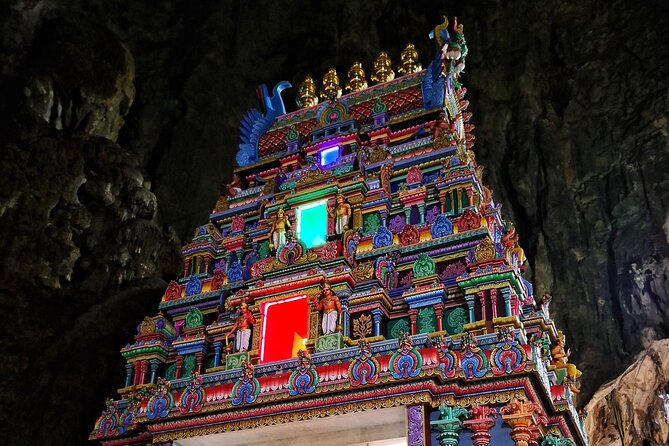
Batu Caves and Sari Experience with Batik Workshop
Read our review →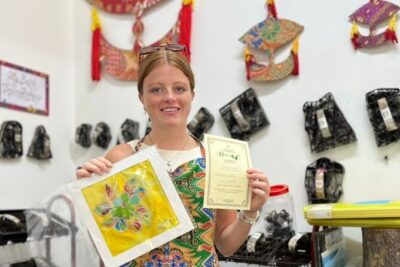
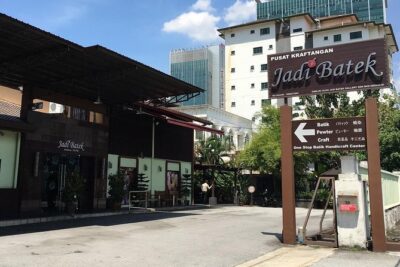
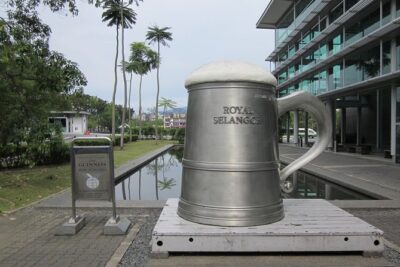
Batu Cave & Royal Selangor Pewter and Batik Visit
Read our review →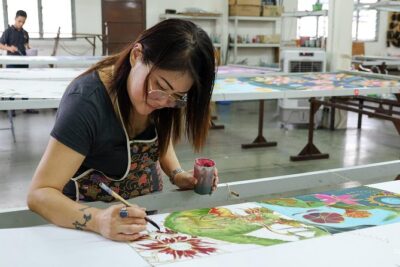
Batu Caves, Royal Selangor Pewter and Batik Factory Tour
Read our review →
Batu Caves, Waterfalls, Hotspring, Batik & Pewter Tour with Lunch
Read our review →Browse the lists this tour appears in